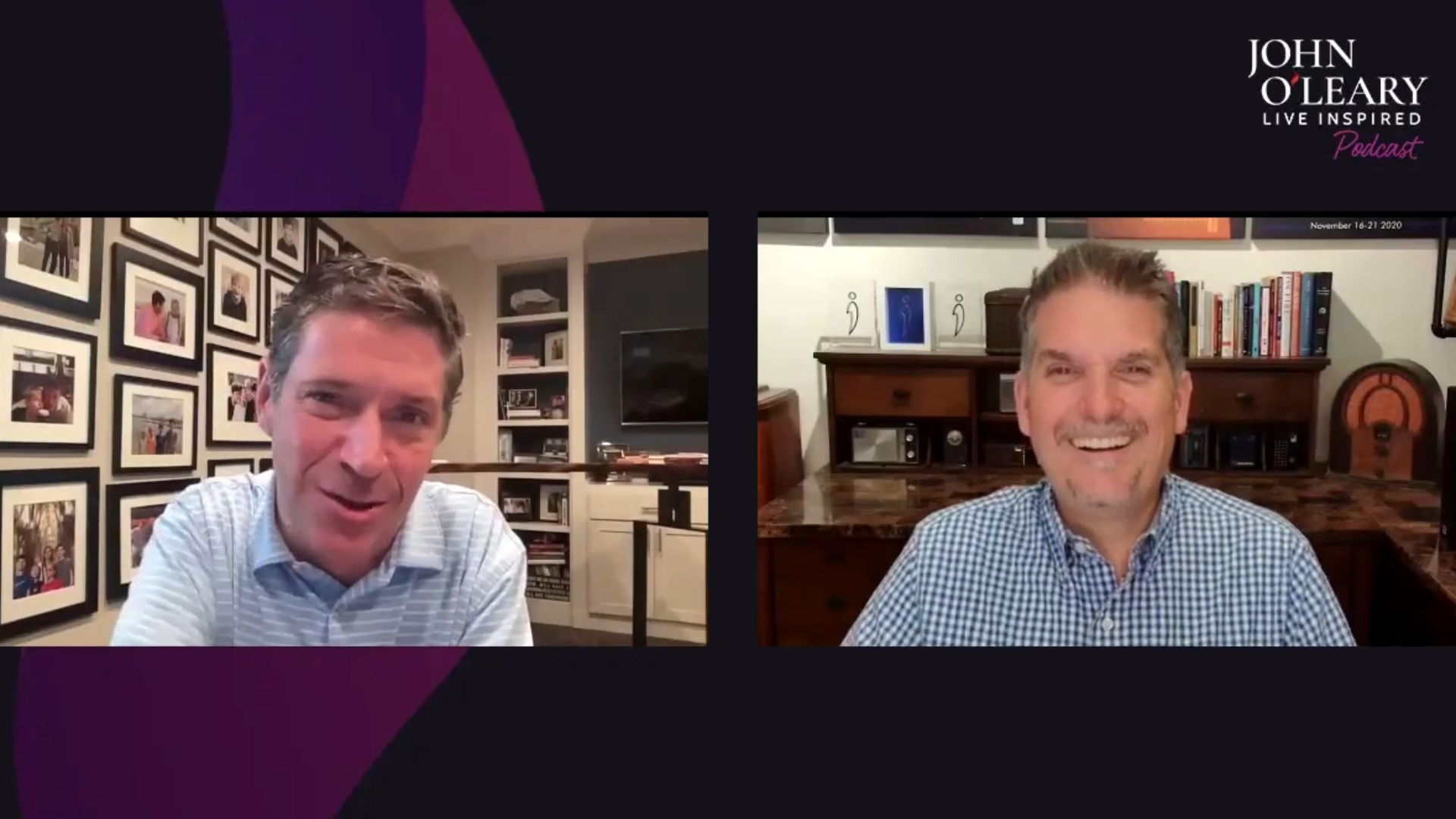




Wayne Connell joins John O’Leary on his Live Inspired podcast
What Living with an Invisible Disability Teaches Us About Real Love and Connection
When someone asks you who you are and why you’re here, what’s your response?
For Wayne Connell, founder of the Invisible Disabilities Association (IDA), the answer is simple: “I’m here to help people be better people.”
Wayne recently joined inspirational speaker, author, and host John O’Leary on his podcast, Live Inspired with John O’Leary, for a deeply moving conversation about life, love, and what it truly means to show up for others.
John O’Leary, who survived severe burns over 100% of his body as a child, understands physical scars and visible adversity firsthand. During their conversation, John notes that while his own physical injuries are instantly apparent to anyone in the room, individuals living with an invisible disability face a different hurdle: navigating profound pain, brain fog, and fatigue while looking “completely fine” on the outside.
As John puts it during the episode, true support requires us to slow down, listen, and refrain from judging what someone is going through internally. We live in a fast-paced world that values quick fixes and productivity, but genuine empathy requires us to do what Job’s counselors did in scripture—simply sit in the ashes with one another.
Born Out of Love and Real Need
The term invisible disability wasn’t coined in a corporate boardroom or a research lab. It was coined right in their living room in 1996 by Wayne’s wife, Sherri.
When Wayne met Sherri in 1992, she was 27 years old—a former actress, model, and musical theater major with multiple college degrees. She was also living with the devastating effects of primary progressive Multiple Sclerosis (MS) and Lyme disease, leaving her permanently disabled in the prime of her life.
“She was just incredible—smart, funny, beautiful, and all these other things,” Wayne shares on the Live Inspired podcast. “And in ’96, she came up with the phrase ‘invisible disabilities’ because people would look at her and think, ‘There’s nothing wrong with you.’ She said, ‘I feel like I’m invisible, and it’s an invisible disability.'”
Having a background in technology, Wayne wanted to help Sherri share her story to reach others who were isolated at home. In 1997—a year before Google went online—they launched a website. Almost immediately, 20,000 people a month began finding the site. It was a window to the world for thousands of individuals who thought they were entirely alone in their suffering.
“Believe People”: Stripping Away the Stigma
During the episode, John and Wayne unpack one of the hardest aspects of living with an invisible disability: disbelief from others.
When a disability is visible, people can see it and comprehend it. But when someone looks healthy on the outside, sharing an invisible disability often leads to unsolicited advice, dismissal, or judgment. People say things like, “Well, you look good,” or “I get tired, too,” or “Have you tried exercising more?”
At IDA, our foundational mission begins with a simple, powerful action: Believe people.
To shift how society views an invisible disability, we have to rethink what the word “disability” even means. A disability isn’t a negative label or a moral failing; it is simply a technical term indicating that someone has to do something differently or use an assistive device—whether that’s medication, a mobility aid, or even a pair of eyeglasses.
Everyone’s journey exists on a spectrum. Believing someone when they share their reality validates their humanity and restores their dignity.
What NOT to Say (and How to Flip the Script)
Well-meaning friends, family members, and coworkers often want to help, but standard social responses can accidentally cause deeper isolation.
On Live Inspired, Wayne shares practical communication lessons from his and Sherri’s book, But You Look Good:
- Stop asking “How are you feeling?”
When living with an invisible disability, this question forces someone to either lie (“I’m fine”) or give an honest, painful answer that the listener may not actually want to hear. Instead, ask: “How are you doing today?” This acknowledges their presence without centering purely on their symptoms. - Avoid becoming the “armchair doctor.”
Offering unsolicited treatments, diets, or motivational speeches can imply that they simply aren’t trying hard enough to get well. In reality, you have no idea how many doctors, treatments, and remedies they have already tirelessly researched and tried. - Don’t make assumptions based on appearance.
Seeing someone out at an event doesn’t mean they are cured. They may have spent weeks preparing for that outing and will likely spend weeks recovering from it. Most of all, they wanted to spend time with you and the sacrifice was worth it. - Let your presence be the present.
A quick text or an emoji on social media isn’t a substitute for real connection. A phone call, a Zoom chat, or spending quiet time together in person lets someone know they haven’t been forgotten.
Finding Hope and Purpose in the Middle of Suffering
Caregiving and living with an invisible disability are deeply demanding paths. It requires sacrificing independence, adjusting life expectations, and stepping into uncomfortable, messy places.
When John asks what over three decades of marriage and advocacy have taught him, Wayne reflects on the true nature of hope:
“Life isn’t about overcoming everything; sometimes it’s about making it through. Suffering produces endurance, endurance produces character, and character produces hope. And what is that hope? The hope is us talking about how we can help others with all the stuff we’ve got going on in our lives. That’s hope.”
Every person—regardless of their physical limitations, health status, or diagnosis—is a masterpiece created with purpose. Their value is not tied to how productive they are, but to who they are.
Tune In & Join the Community
Watch the full conversation between Wayne Connell and John O’Leary on the Live Inspired with John O’Leary Podcast. To learn more about supporting a loved one or finding community for your own journey, explore our resources and books right here at InvisibleDisabilities.org.